All Pain is in your head.
All pain is in your head. It is created in the brain in response to the brain’s decision about what will protect you/help you survive/help you avoid further injury. The brain is not always correct in its assessment. We know this because of things like phantom limb pain. Sometimes the brain’s assessment is unexpected- a person has a life-threatening injury and they feel nothing until they are being treated in hospital. That same person later stubs their toe and feels excruciating pain. This makes sense in terms of safety and protection. Someone with a life-threatening injury cannot get to the help they need if they are in too much pain, whereas a person who has stubbed their toe only needs a reminder to watch where they are going.
One in five Canadians experience chronic pain– pain that persists after an injury to bone or muscle would have healed or pain with no clear original cause- often after long term stress or in people with trauma histories. All pain, even pain related to recent injury can be better managed when fear, frustration and anger are reduced, some pain, in particular chronic pain with no clear source, or persisting after past injury is healed, can be eliminated by retraining the brain’s responses to pain triggers including the response to the sensations of pain.
Pain reprocessing therapy is all about disconnecting the brain’s assessment of danger from the sensation or the trigger. Pain reprocessing therapy is a lot like exposure therapy, but gentle. Doing nothing, protecting oneself from pain by limiting movement or activity, reenforces the message that the activity or trigger is dangerous. Pushing through and ignoring pain sensation re-triggers the danger signals to say that the trigger or sensation is dangerous because it is overwhelming. Retraining the brain is about slow, gentle, pacing of activity, partnered with calming strategies and mental reminders of safety. It is not about avoiding activity completely and it is not about just pushing through pain, both of which continues sending the message of danger to the brain, resulting in more pain. It is about sitting with low levels of sensation for short periods of time to help the brain lower its defense mechanism.
Retraining the brain is about slow, gentle, pacing of activity, partnered with calming strategies and mental reminders of safety. It is not about avoiding activity completely and it is not about just pushing through pain, both of which continues sending the message of danger to the brain, resulting in more pain.
Many people with chronic pain and other types of pain have been ignored, blamed or had their symptoms minimized by health care professionals, boss or family members. They’ve been told at times that it is “all in your head.” The reality is that it is all in your head, all pain is in your head, this does not make it any less valid or painful! The question is whether your head is actually helping to protect you or if your head has misjudged your needs. The concept of the brain/nervous system as an alarm system that is designed to protect but that occasionally overreacts is a metaphor that speaks most clearly to me about how this system works. The alarm is designed to go off when there is an intruder, but sometimes it starts sounding when the wind blows a branch by the window or when a battery gets low or when a mouse has chewed through some wiring. Why it is going off is sometime very difficult to ascertain but ruling out any clear danger is the first step to helping to fix the problem.
When pain is related to illness or injury, acknowledging that it is trying to protect you and determining physical limits that will prevent further injury or illness is critical, but often pain persists even when we are taking precautions and in levels of intensity that can get in the way of recovery and wellbeing. Turning down the levels of pain, is part of retraining in these cases.
Our brain exists within a body that responds, not only to physical injury or reminders of injury but also to stress created externally or internally. Life can be stressful, but we can also increase our stress through self criticism, perfectionism, over performing, etc. our relationship with ourselves can affect our experience of pain and other physical symptoms. Creating a positive relationship with oneself can change the experience of living in one’s body from stressful and dangerous to safe and comforting. This is often longer-term work to recreate the way that we relate to ourselves but this work can result in significant reduction in pain and chronic illness symptoms.
Creating a positive relationship with oneself can change the experience of living in one’s body from stressful and dangerous to safe and comforting.
If you are living with chronic pain or illness, there is hope for a better life. Find a therapist that understands coping with pain and reprocessing pain to support your journey to retrain your brain.
Further resources
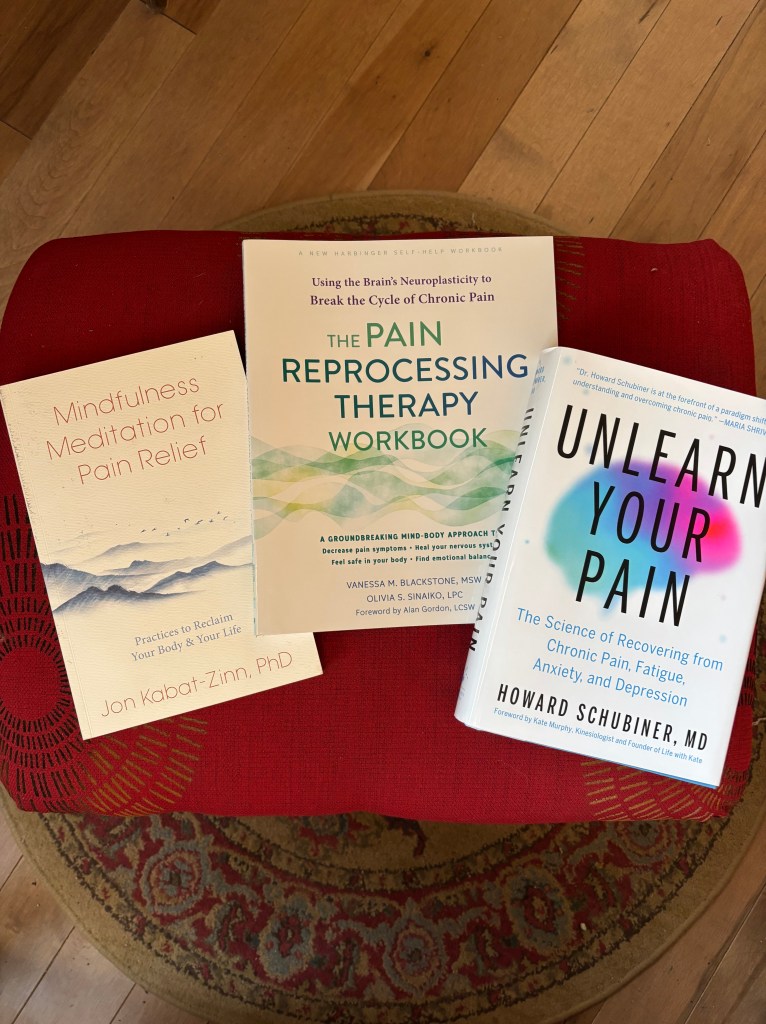
Also check out https://itsnotjustyou.ca/2018/03/12/chronic-pain-illness/
Talk to a therapist. Don’t suffer alone. If the professionals you’ve reached out for help have not been supportive, don’t give up, keep looking for ones that are. They are out there.

